
When a ground station has one antenna and two satellites need to be in view at the same time, something has to give. That's the contention problem, and it's not a hypothetical edge case — it's a daily operational reality for any multi-mission ground network. At Orbitvein, we designed our scheduling engine specifically around this problem, because getting contention resolution wrong means mission-critical contacts get dropped, operators lose trust in the network, and the whole premise of shared infrastructure falls apart.
The Geometry of Contention
Contention arises because satellite passes are determined by orbital mechanics, not operator scheduling preferences. A LEO satellite at 500 km altitude has an orbital period of approximately 94–95 minutes and a contact window of 6–12 minutes with a given ground station. You can't move the contact window — you can only decide whether to take it or defer it.
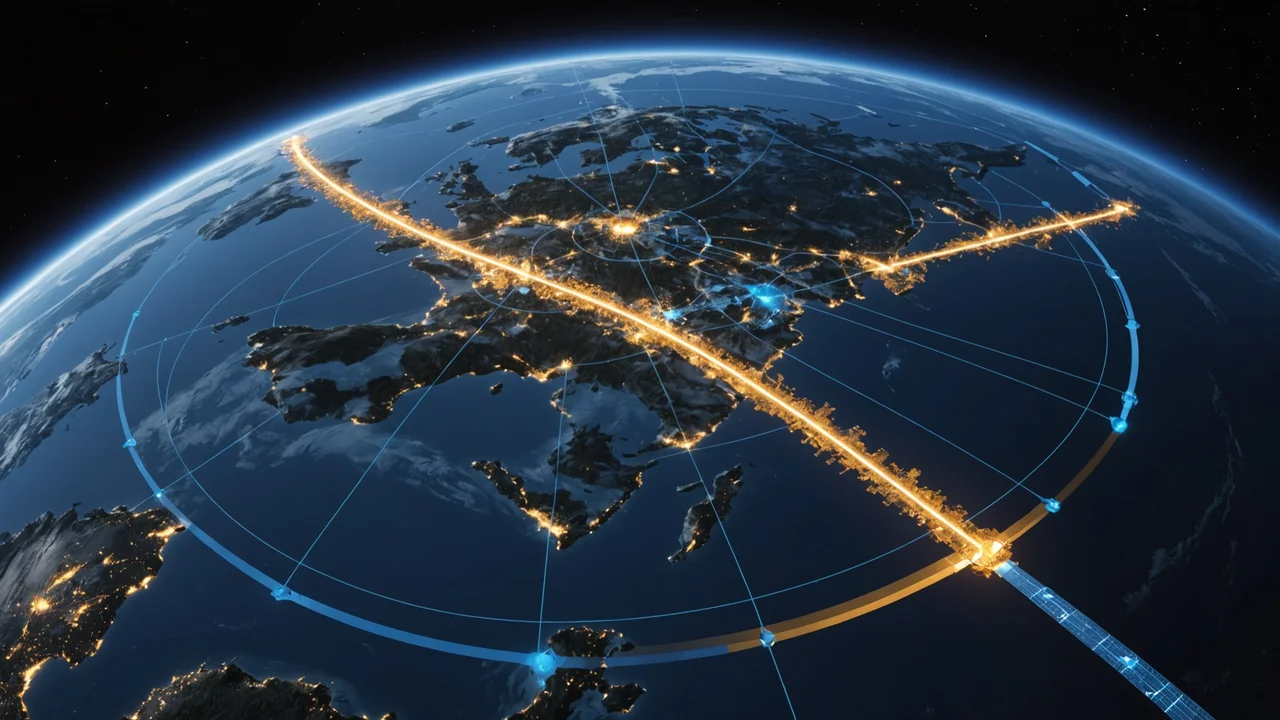
For a single ground station serving multiple operators, contention probability depends on the total number of satellites in the schedule and the distribution of their orbital planes relative to the station latitude. At a mid-latitude station (say, 45°N), 10 satellites across diverse inclinations and RAAN values will have overlapping contact windows perhaps 8–15% of the time. At a polar station (70°N+), where all high-inclination LEO satellites pass overhead, contact density is much higher — 20–30 simultaneous satellite visibility events during busy orbital epochs are possible, with contention rates well above 40% for a busy network.
That's why polar stations are simultaneously the most valuable and the most contention-prone assets in a LEO ground network. A shared polar station that isn't actively managed with a contention scheduler will regularly fail to deliver promised contacts.
Contention Resolution: Priority Models
Several approaches to contention resolution are used in practice. Each involves different tradeoffs between fairness, mission criticality accommodation, and operator predictability.
First-come, first-served (FCFS). The simplest approach: the first operator to book a contact window gets it; latecomers are rejected. This is operationally simple and completely fair in one sense, but it rewards operators who book aggressively far in advance and penalizes those who need short-notice contacts. For a network serving operators with anomaly response needs, FCFS is problematic — you can't book anomaly contacts in advance.
Priority tiers. Contacts are assigned a priority level — emergency, mission-critical, routine, background — and higher-priority contacts preempt lower-priority ones up to a defined deadline. This is how we handle it at Orbitvein: emergency anomaly contacts preempt any routine contact at the same station, subject to a defined preemption notice window. Operators are notified immediately when their contact is preempted and the system automatically proposes the nearest alternative contact window.
Weighted fair queuing. Each operator's contacts are weighted by a service tier or SLA, and the scheduler allocates contested windows proportionally. An operator on a higher service tier gets contact priority over an operator on a lower tier when both have equivalent-priority contacts at the same station. This introduces commercial tiering into the contention model.
Station-aware rerouting. Rather than resolving contention at a single station, the scheduler detects contention and routes one of the competing contacts to a geographically alternate station that has visibility of the same satellite at overlapping or adjacent epochs. This is the most operationally clean solution — both contacts are delivered, to different stations — but it requires enough station density that alternates exist with adequate orbital geometry.
How Orbitvein's Scheduling Engine Works
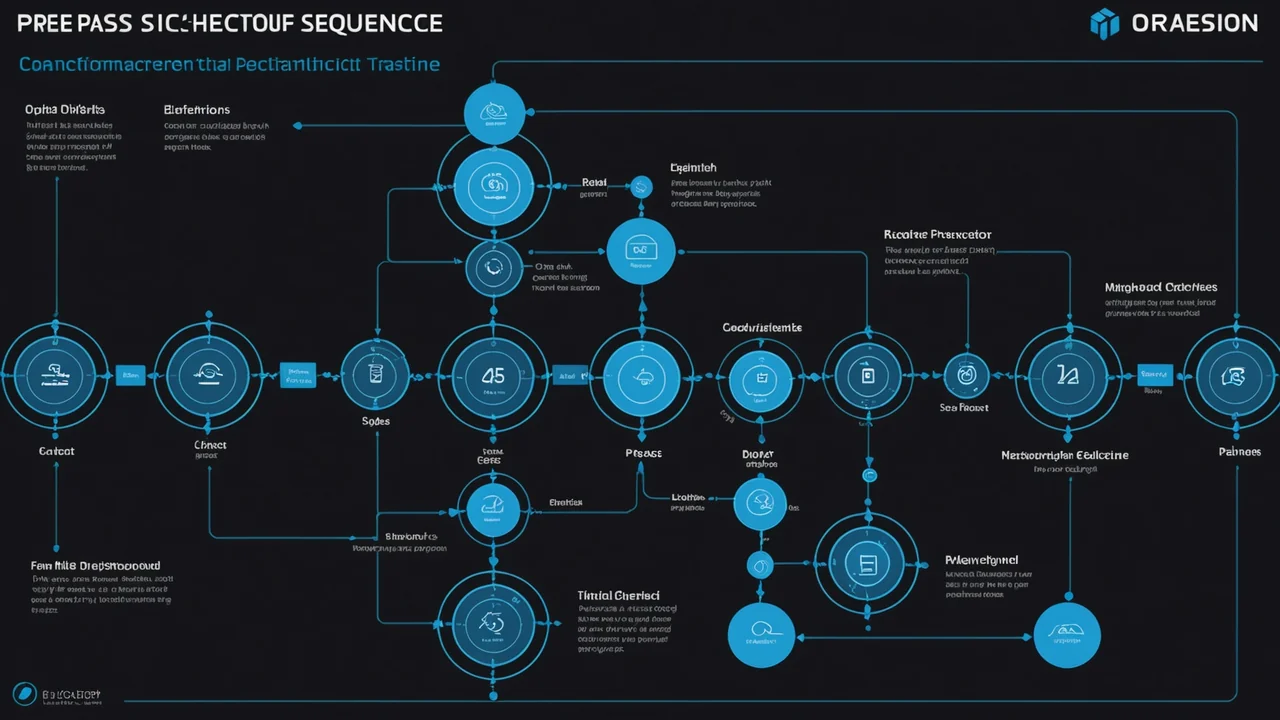
Our approach combines priority tiers with station-aware rerouting as the primary contention resolution path. When a new contact request arrives, the scheduling engine does the following:
- Computes the contact window geometry for the satellite at all network stations, not just the requested or nearest station
- Identifies the preferred station (typically lowest elevation angle minimum and highest predicted link margin)
- Checks for existing bookings at the preferred station in the predicted contact window ± 5 minutes antenna slew margin
- If contested, evaluates alternate stations with acceptable contact geometry in the same orbital pass epoch
- If no conflict-free alternate exists, applies priority comparison and either confirms the requested contact, proposes an adjacent epoch at the preferred station, or elevates the contention to the operator for manual resolution
The typical latency from API booking request to confirmed contact with link budget parameters is under 30 seconds for routine contacts. For emergency-priority contacts, the scheduler resolves preemption decisions within 15 seconds and notifies all affected parties immediately.
The Station Density Multiplier
The single most effective contention reduction strategy is network station density. More stations mean more alternate contact options, which means rerouting resolves contention before priority preemption becomes necessary. This sounds obvious but has a specific operational implication: a ground network's contention performance isn't linear with station count. Each additional station in a region reduces contention probability disproportionately because it expands the solution space for rerouting.
We measured this internally when we expanded from 28 to 40+ station partnerships: the rate of priority preemption events dropped by roughly 60% even as operator satellite count increased. Station density is the decisive factor — which is why we invest in extending the network even for regions that seem well-covered at mid-elevation angles, because the rerouting benefit comes from having alternatives in adjacent geographic positions, not just adding redundant coverage at the same geometry.
Contention resolution is a network density problem masquerading as a scheduling algorithm problem. Better algorithms help, but more stations help more.
Fairness and Transparency in Multi-Mission Scheduling
One operational issue that comes up regularly: operators want to understand why a contact was rerouted or preempted. "Your contact at Station A was moved to Station B" is acceptable. "Your contact was dropped, no explanation" is not. This sounds basic but a surprising number of shared ground networks treat contact failures as black boxes from the operator's perspective.
In our operator dashboard and API responses, every contact modification — rerouting, preemption, alternative epoch proposal — includes a reason code and the alternative being offered. If a contact was preempted by an emergency booking from another operator, we indicate that an emergency preemption occurred (without identifying the other operator) and confirm the alternative. If rerouting moved the contact to a different station, the new station's link budget parameters are provided so the operator can validate the alternate path meets their mission requirements.
This transparency matters operationally. An operator who knows their contact will be at Station B instead of Station A can update their pre-pass checkout sequence, verify antenna pointing parameters, and adjust downlink storage allocation. An operator who discovers a reroute at T-5 minutes has no time to adapt.
Planning for Contention at Scale
For operators adding satellites to an active constellation, contention planning should be part of the constellation scaling conversation, not an afterthought. Each new satellite increases the contact demand on the network at a nonlinear rate if the new satellite shares similar orbital parameters with existing satellites — they'll contend at the same stations at similar epochs.
We work with operators before they add satellites to model the expected contention impact on their existing contact schedule. For a 5-satellite constellation adding 5 more satellites in the same orbital plane, the contention impact is typically modest — the new satellites see similar contact windows but at staggered orbital positions. Adding 5 satellites in a different inclination can have a larger impact at specific station geometries. Running that simulation before the launch campaign is worth the time.
If you want to understand how your current or planned constellation's contact demand would interact with our scheduling system, we can run the orbital analysis with your TLE data. Contact us at [email protected] to set up a technical review.