
Global ground infrastructure, on demand
One API to access 40+ licensed ground stations across 6 continents. S-band, X-band, and Ka-band. Pay per contact minute from day one.
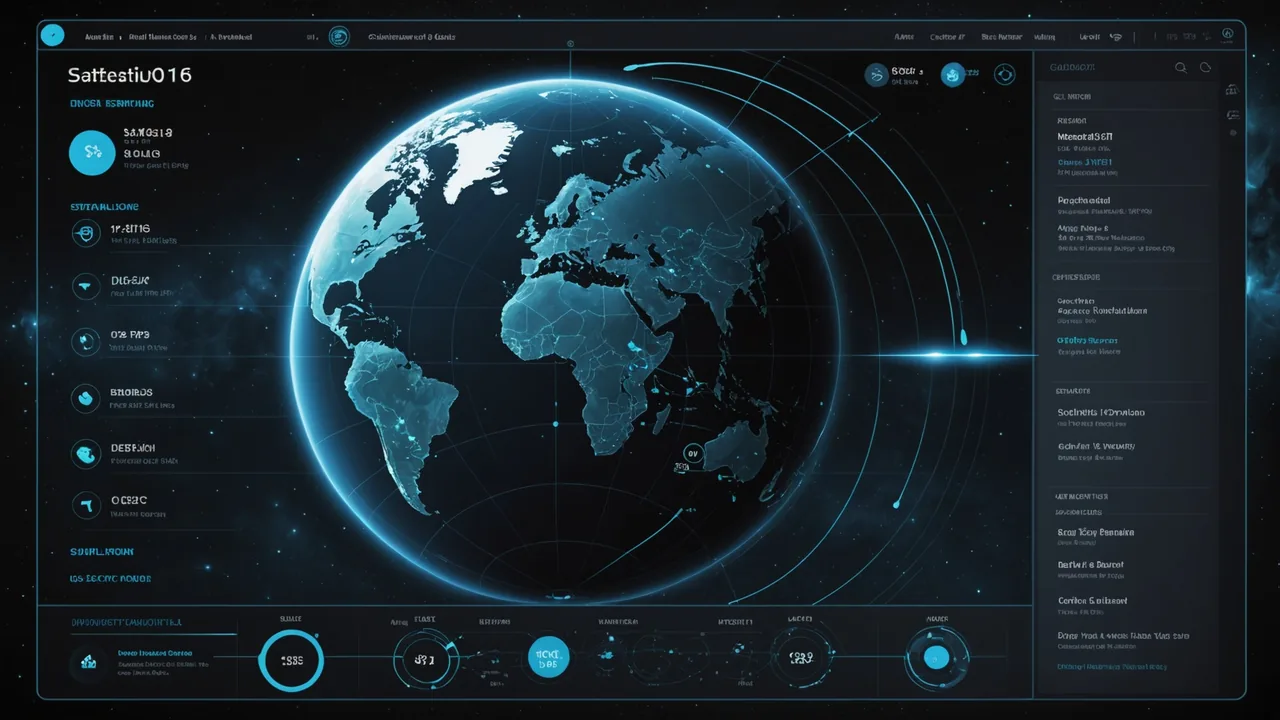
The ground station problem commercial operators face
Commercial satellite operators running LEO and MEO constellations of 1 to 100 satellites face a structural problem: building and maintaining proprietary ground infrastructure costs $1 to $2 million upfront and 14 or more months of engineering time, yet still leaves coverage gaps during critical contact windows.
A typical LEO operator sees 3 to 5 contact windows per day per ground site. A single missing polar station creates 6-hour communication blackouts for high-inclination orbits. The engineering team that should be focused on satellite operations is instead managing ground station procurement, frequency licensing across multiple regulatory jurisdictions, and station maintenance contracts.
For early-stage operators scaling from a technology demonstration to a commercial constellation, the problem compounds: each new orbital plane requires a new station, each station requires a separate capital budget cycle, and the timeline for new station construction outlasts the orbital planning horizons most operators work with.
How the Orbitvein network works
The process from satellite TLE submission to data delivery in your storage account involves three stages, each handled by Orbitvein's scheduling infrastructure without operator manual intervention.
Submit TLE and contact schedule
Operators submit satellite TLE (Two-Line Element) data and operator-defined contact windows via REST API or the dashboard scheduling interface. Each submission includes frequency band requirements, encryption key configuration, and data delivery destination — S3 bucket ARN or Azure Blob container. The API accepts TLE updates whenever orbital parameters change, keeping contact predictions current without manual re-entry.
Scheduling engine allocates stations
Orbitvein's scheduling engine matches orbital parameters against the global 40+ station network, books the optimal antenna for each pass, and routes the link through the selected site in real time. The engine resolves scheduling conflicts across all active customers automatically and returns a confirmed booking with link budget parameters — elevation angle, predicted signal strength, and estimated contact duration. Emergency bookings preempt non-critical contacts for operators in anomaly conditions.
Data delivered, telemetry logged
Uplink commands are delivered to the satellite during the contact window. Downlink telemetry and payload data are delivered to the operator's configured S3 bucket or Azure Blob storage within 5 minutes of contact end. Delivery includes contact metadata: actual contact start and end times, data volumes, link margin measurements, and CCSDS packet checksums where applicable. Every contact generates a link budget report exportable as PDF for mission documentation.
Platform capabilities
Six capabilities that replace the need for proprietary ground infrastructure — from first satellite launch through a full commercial constellation of 100 satellites.
Global Network Coverage
40+ licensed stations across 6 continents including polar regions. LEO operators with orbital inclinations up to 98 degrees achieve multiple daily contact windows per satellite. All stations ITU-coordinated and frequency-licensed. Contact reliability 99.5% monthly.
Multi-Band Support
S-band, X-band, and Ka-band managed under one API and billing account. No fragmented vendor relationships. Operators define per-satellite frequency plans at onboarding; the scheduler automatically selects antenna configurations that match each mission's frequency requirements at every contact window.
Real-Time API Scheduling
Book contact windows with as little as 15 minutes lead time via REST API. Emergency priority bookings available for anomaly response. The scheduling engine resolves conflicts automatically and returns confirmed bookings with link budget parameters without manual operator coordination.
End-to-End Encryption
AES-256 pipeline with operator-controlled keys. Orbitvein infrastructure never stores or accesses plaintext telemetry or payload data. The ground station acts as a radio relay within the encrypted session. Key rotation handled by the operator without Orbitvein involvement — satisfies ITAR and EAR compliance for many mission profiles.
Constellation Scaling
Adding a new satellite requires uploading its TLE data and frequency plan — no procurement cycles, no site engineering, no new contracts. The scheduler immediately computes contact windows across the full station network. Pay only for contact minutes consumed with no per-satellite license fees and no minimum commitments per satellite.
Mission Analytics Dashboard
Full contact history, link budget reports, and anomaly timeline in one operator view. Every contact generates an automatic link budget report exportable as PDF. The anomaly event log captures interruptions and correlates them with station status events for root cause analysis without manual log correlation.
Who Orbitvein is built for
Orbitvein is purpose-built for commercial NewSpace operators running LEO and MEO constellations of 1 to 100 satellites — including Earth observation, IoT connectivity, and technology demonstration missions.
The platform is designed for operators at the early-stage to commercial-scale phase: teams that have satellites in orbit or on the launch manifest, have technical staff capable of working with a REST API, and need ground network access without the capital expenditure and lead time of proprietary infrastructure.
The pay-per-contact-minute model is particularly suited to operators whose satellite count is growing — you pay for what you use, add satellites by uploading a TLE, and scale ground network capacity with your constellation without procurement cycles.
This platform is for operators who:
- Are running 1 to 100 satellites in LEO or MEO orbits
- Need multi-band support (S, X, or Ka-band) from a single platform
- Want to onboard ground network access within days, not months
- Require AES-256 encryption with operator-controlled key management
- Are scaling a constellation and need ground capacity to grow with them
- Value transparent link metrics and per-contact audit trails
Integrations and protocols supported
Onboard your constellation in days, not months
Talk to our team about your mission profile. We will scope out which stations serve your orbital planes and have you scheduling contact windows within a week of signing.